Dream Journal Slide Templates: A Flexible Foundation for Creative Projects
For anyone exploring tools to organize thoughts, design creative products, or build a small business around digital goods, the search for versatile resources can be overwhelming. Among the many options available, a product like Dream Journal Slide Templates presents a unique value proposition. It’s not just a single-use printable; it’s a foundational PDF file designed to serve as a springboard for multiple creative and commercial projects. Understanding its core nature is the first step in evaluating whether it fits your specific needs.
What Exactly Are Dream Journal Slide Templates?
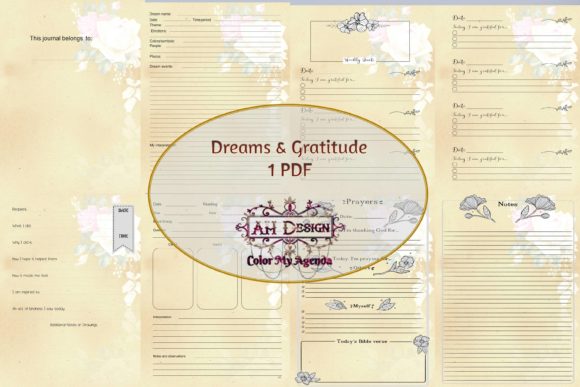
At its heart, this is a curated collection of digital templates formatted as a single, consolidated PDF document. The design aesthetic typically leans into ethereal, reflective, and imaginative themes suitable for capturing dreams, goals, or personal reflections. However, the term "slide" is key here. Unlike a traditional journal page, these templates are structured as individual, visually distinct pages or "slides." This layout offers a modern, presentation-like feel that can be repurposed far beyond simple journaling.
The primary distinction lies in its dual-purpose nature. It is both a ready-to-use product for personal projects and a commercial license asset. This means you can use the PDF directly to create your own dream journal or sell the PDF file to your customers as a digital download. More significantly, you can use the templates as a foundational component to build entirely new products for sale in your shop, such as custom journals, planners, or creative kits.
Comparing the Approach: Templates vs. Starting from Scratch
When embarking on a creative project, you generally face a foundational choice: build everything from zero or use a pre-designed template system. Each path has clear tradeoffs.
The Custom Creation Path
Designing layouts, choosing typography, and creating graphics from the ground up offers total creative control. This is ideal for artists or designers with a specific vision and the skills to execute it. The process is deeply personal but can be time-intensive and may require advanced software proficiency. For someone aiming to launch a highly unique, brand-specific product line, this might be the long-term goal.
The Template-Based Path
Using a resource like Dream Journal Slide Templates accelerates development. You start with a professionally designed, cohesive aesthetic. This path is particularly advantageous for those who are stronger in curation, content creation, or marketing than in graphic design. The tradeoff is working within the template’s existing style framework, though many templates are designed with enough flexibility for significant customization.
This approach is often compared to using graphic design platforms with built-in template libraries. While those platforms are powerful, they typically require an ongoing subscription and often have licensing restrictions on selling the raw templates themselves. A single PDF template file, when sold with commercial rights, provides a clear, one-time cost and straightforward usage terms for specific types of resale.
Practical Applications and Best-Fit Scenarios
The utility of these templates expands dramatically when you consider them as a building block. Here are realistic use cases where they shine, compared to alternative resources.
- Creating Junk Journals or Art Journals: The themed slides can be printed, cut, and collaged into mixed-media journals. This is often faster than creating every element by hand. An alternative might be using digital stamp brushes or clipart sets, but those require more assembly and design skill to achieve a cohesive look.
- Developing a Digital Product Line: You can use the templates as a base, add your own text prompts, graphics, or branding, and package the result as a new PDF journal for sale. This is more efficient than designing from scratch, but less unique than a fully custom creation. The decision factor here is your time-to-market versus your brand’s distinctiveness.
- Physical Product Prototyping: If you plan to sell printed journals, these slides are excellent for quickly mocking up a book interior to test layout and flow before committing to a larger print run.
- Content Creation Tools: Bloggers or coaches might use the slides as visual aids for social media posts about mindfulness or goal-setting, creating a consistent aesthetic quickly.
It’s less ideal if you need a fully interactive digital planner (like a hyperlinked PDF) or a minimalist, text-only journal. For those needs, specialized digital planner templates or simple document editors might be a better starting point.
Evaluating Strengths and Limitations
A clear-eyed look at what this type of product offers—and where it falls short—helps in making an informed choice.
Core Strengths
- Speed and Efficiency: Dramatically reduces the time from idea to finished product or project.
- Professional Aesthetic: Provides a polished, cohesive look that might be difficult to achieve independently without design experience.
- Commercial Flexibility: The included license to sell the PDF or use it in products for sale is a significant value driver for entrepreneurs.
- Low Barrier to Entry: Requires only a PDF reader and a printer (for physical projects) or basic editing software to get started.
Inherent Limitations
- Design Conformity: Your end products may visually resemble others using the same base templates, unless you invest effort in significant customization.
- Format Constraints: As a static PDF, it lacks the reflowable adaptability of a word processor document or the interactivity of a digital planner. Edits are often limited to annotation or overlaying text in separate software.
- Scalability Questions: While excellent for starting, a business built solely on reselling unaltered templates may face market saturation. The long-term strategy would involve using them as a component in a larger, unique value proposition.
When to Choose This Path and When to Look Elsewhere
Choosing Dream Journal Slide Templates makes sense if your priority is launching a creative project quickly with a professional look, especially if you plan to monetize it. It’s a strong fit for:
- Small business owners in the digital product space looking to expand their inventory efficiently.
- Crafters and journalers who want beautiful pages without the design overhead.
- Content creators needing consistent visual assets for their niche.
You might need a different tool if:
- You require a fully customizable, editable file format (like an .indd or .ai file) for deep branding integration.
- Your project demands a non-thematic, ultra-minimalist, or highly technical layout.
- You are building a complex, interactive digital product that requires hyperlinking and dynamic navigation.
Ultimately, Dream Journal Slide Templates function best as a strategic accelerator. They provide a solid, aesthetically pleasing foundation that can be used as-is or transformed into something new. The value is highest for those who see it not as the final product, but as a versatile component in their creative or commercial toolkit. By comparing this approach against the demands of your specific project—considering factors like time, skill, desired uniqueness, and end format—you can determine if it’s the right building block for your next endeavor.