Mastering Google Ads Banner Templates for Efficient Campaign Creation
Launching a successful display campaign on the Google Display Network requires more than just a compelling offer; it demands visual assets that capture attention across a multitude of website placements. Google Ads Banner Templates serve as the foundational blueprint for creating these assets efficiently. These templates are pre-designed frameworks that adhere to the specific dimension requirements and best practices set by Google, allowing marketers and creators to bypass the technical hurdles of file sizes, aspect ratios, and resolution standards. By utilizing these resources, professionals can focus their creative energy on messaging and brand alignment rather than technical specifications.
Integrating Templates into Your Creative Workflow
Understanding where a template fits into your broader marketing process is key to maximizing its utility. For many, the design phase begins only after the copywriting and strategy sessions are complete. However, integrating Google Ads Banner Templates earlier can streamline the entire operation. When you select a template structure during the planning phase, you can tailor your ad copy to fit the specific text overlays and call-to-action placements available in the design. This prevents the common bottleneck where final copy does not fit the visual layout, necessitating last-minute revisions.
The workflow typically follows a logical progression:
- Strategy and Copywriting: Define the campaign goal and draft the core message.
- Template Selection: Choose a template that aligns with the campaign's tone and technical requirements.
- Customization: Edit the layers, colors, and typography to match brand guidelines.
- Asset Integration: Insert the final high-resolution images or illustrations.
- Export and Upload: Generate the final files and upload them to the Google Ads platform.
The Role of Editable Files in Team Collaboration
In a professional setting, assets rarely pass through a single pair of hands. A common pain point in design collaboration is file compatibility. Google Ads Banner Templates provided in formats like Adobe Illustrator (.AI) solve this issue by offering a universal standard for vector editing. When a template features Layer Organized Files, it becomes significantly easier for different team members to contribute. A copywriter might adjust the text, a graphic designer might tweak the layout, and a brand manager might verify color codes—all without disrupting the file's integrity.
This organized structure is not just a convenience; it is a quality control mechanism. When layers are properly labeled and grouped, the risk of accidentally deleting a critical element or saving over the wrong version decreases significantly. It allows for a non-destructive editing process where changes can be rolled back easily, ensuring that the creative output remains consistent with the initial vision.
Customization and Brand Consistency
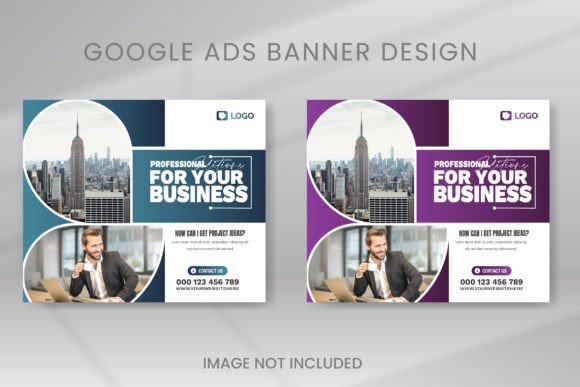
One of the primary advantages of using a Trendy Creative Editable Google Banner for Social Media Design Template is the ability to maintain brand consistency across various platforms. While the primary use case is the Google Display Network, the dimensions and design principles often overlap with social media advertising. A versatile template allows you to create a cohesive visual identity that works on both Google Ads and platforms like Facebook or Instagram.
Effective customization goes beyond simply swapping out the logo. It involves:
- Typography Alignment: Ensuring the font used in the template matches or complements the brand’s primary typeface.
- Color Palette Application: Applying brand hex codes to background elements, buttons, and text highlights to reinforce visual recognition.
- Visual Hierarchy: Adjusting the size and placement of elements to ensure the value proposition is the first thing the viewer notices.
Managing Visual Assets: The "Image Not Included" Factor
A critical detail often overlooked in the rush to launch a campaign is the sourcing of imagery. Most professional templates come with a disclaimer: Image is Not Included. This is a standard practice designed to keep file sizes manageable and to avoid licensing complications. However, it requires the user to have a library of high-quality images ready for integration.
Before downloading a template, assess the visual requirements. Does the design feature a central focal point, or does it use a fragmented grid? Knowing this helps you select images that will fit the composition without awkward cropping. For instance, if the template relies on a full-bleed background image, you need a photo with high resolution and negative space where the text can be placed without obscuring the subject. Planning for this asset gap ensures that the design process is not stalled while waiting for stock photography.
Practical Implementation Tips for Efficiency
To truly leverage the power of Google Ads Banner Templates, one must move beyond basic editing and adopt a production-line mindset. This is particularly relevant for freelancers or small business owners managing multiple campaigns simultaneously.
Batch Processing and Variations
Rather than creating one banner at a time, use the template to generate a set of variations. A/B testing is a fundamental component of optimizing click-through rates. By using an organized AI file, you can easily duplicate the design and swap out headlines or images to test different value propositions. This approach allows you to populate an entire ad group with multiple creative variations in a fraction of the time it would take to design each from scratch.
Ensuring Compatibility and File Health
Before finalizing your export, it is essential to verify that the file meets Google’s technical specifications. While templates are generally built to these specs, customizations can sometimes alter file sizes or formats. Always check:
- File Size: Ensure the final export is under the maximum limit (usually 150KB for display ads).
- Format: Confirm the output is a static JPG, PNG, or a compliant HTML5 file if animating.
- Resolution: Ensure the image quality is sharp, particularly for retina displays, without creating pixelation.
Long-Term Use and Asset Management
The value of a high-quality template extends far beyond a single campaign. By establishing a library of customized Google Ads Banner Templates, you create a reusable asset that speeds up future launches. When a new seasonal promotion or product update arises, you can revisit your saved templates, update the specific details, and deploy new ads within hours rather than days.
This long-term approach fosters a sustainable workflow. It reduces the cognitive load associated with starting a new design from a blank canvas and ensures that your advertising materials remain visually consistent over time. For agencies and businesses alike, this consistency builds brand equity and trust with the target audience.
Ultimately, the goal of using these templates is to remove friction from the creative process. By handling the technical scaffolding—layer organization, dimension compliance, and file structure—the templates free up mental bandwidth. This allows marketers to focus on what truly matters: crafting a message that resonates and drives results. Whether you are a seasoned designer or a business owner handling your own marketing, integrating these tools effectively is a practical step toward a more organized and productive advertising workflow.