Streamlining Your Content Strategy with Blog Post Planner Templates
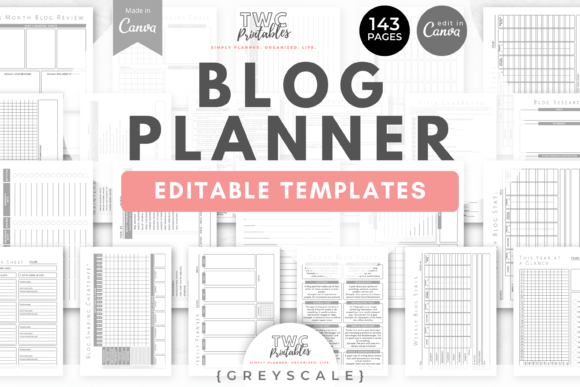
In the fast-paced world of digital marketing and content creation, the gap between having an idea and publishing a polished post can often feel insurmountable. For many writers, the challenge isn't just the writing itself, but the organization required to maintain a consistent publishing schedule. This is where the utility of structured planning tools becomes evident. Specifically, Blog Post Planner Templates designed for physical use offer a tangible solution to a digital problem. These templates, often available as interiors for low-content publishing on platforms like Amazon KDP, provide a dedicated space to map out the entire lifecycle of a blog post, from the initial spark of an idea to the final checklist before hitting "publish."
Unlike digital apps that can be cluttered with notifications and distractions, a physical planner interior allows for a focused, tactile planning experience. The specific type of product we are examining—Blog Post Planner Templates formatted for Amazon KDP—refers to printable interiors that authors and entrepreneurs can purchase, download, and either print themselves or use to create their own branded planners. These are not just blank notebooks; they are structured frameworks designed to guide the user through the necessary steps of content creation.
Anatomy of a High-Quality Blog Post Planner Interior
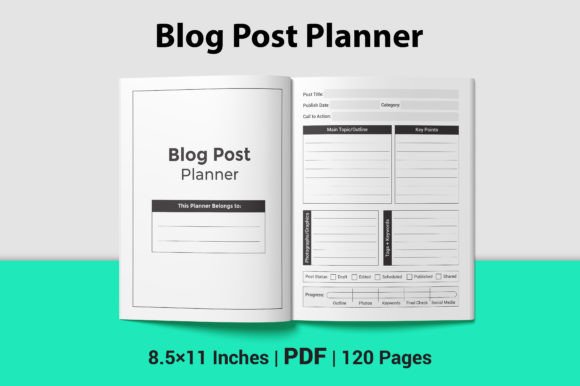
When evaluating these templates, the physical specifications are just as important as the layout. A professional planning experience requires a professional format. The standard for high-quality Blog Post Planner Templates usually centers on the US Letter size, specifically 8.5 x 11 inches. This dimension is widely recognized in the industry as the "Goldilocks" size—large enough to write detailed notes without cramping, yet standard enough to fit into binders or slip into a bag.
Furthermore, the page count plays a significant role in the utility of the planner. Options typically range between 100, 110, and 120 pages. For a prolific blogger, 100 pages allows for the planning of 100 individual posts. Depending on your publishing frequency, this could represent anywhere from two to ten years of planning capability. The inclusion of PDF, AI, EPS, and JPG files ensures that the user has maximum flexibility. While the PDF is ready for immediate upload or printing, the vector formats (AI and EPS) allow for customization by those with design skills who may wish to alter the layout slightly.
Key Design Features: No Bleed and Print-Readiness
A critical technical detail that separates amateur designs from professional ones is the "bleed" setting. These specific Blog Post Planner Templates are designed with No Bleed. In printing terminology, "bleed" refers to artwork that extends beyond the edge of the page. For interiors that are meant to be written in, a no-bleed design is superior because it ensures that text and lines do not get cut off during the printing process. It creates a clean, safe margin that protects the user's notes.
Moreover, these interiors are described as high-resolution and print-ready. This means the lines are sharp, the text is crisp, and the file is optimized for ink consumption. When you download a product like this, you are paying for the assurance that the layout will not pixelate when printed, regardless of whether you are using a home inkjet printer or a professional print shop service.
Comparing Physical Planners to Digital Alternatives
When deciding if a physical planner interior is the right choice, it is helpful to compare this approach against the digital alternatives available today, such as Trello, Asana, or Notion.
The Case for Digital: Digital tools excel at collaboration. If you are working with a large team of writers and editors who need to see real-time updates, a cloud-based dashboard is often the superior choice. Digital tools also offer automation, such as calendar syncing and deadline reminders.
The Case for Physical Blog Post Planner Templates: However, digital fatigue is a real phenomenon. Many writers find that stepping away from the screen to plan their content leads to more creative thinking. A physical planner offers:
- Zero Distraction: There are no pop-up notifications or tempting browser tabs.
- Memory Retention: Studies suggest that writing by hand can improve memory retention of the material.
- Tangible Progress: There is a psychological satisfaction in physically crossing off tasks or filling up a planner page by page.
Evaluating the "Interior Only" Format
One distinct aspect of these products is that they are sold as Interior Only. This is a crucial distinction for buyers to understand. You are not receiving a finished, bound book with a cover. Instead, you are receiving the digital blueprint for the inside pages.
This format presents unique advantages and tradeoffs:
Advantages
- Brand Consistency: Because you need to create your own cover, you have total control over the exterior design. You can match the planner to your specific brand colors, logo, and aesthetic.
- Cost Efficiency: Interiors are generally more affordable than custom-designed planners. You are leveraging a professional layout without paying for a full design service.
- Resale Potential: If you purchase the commercial rights (depending on the license), you can upload these templates to Amazon KDP, add your own cover, and sell the planner to your own audience as a product.
Tradeoffs
- Design Skill Required: To make this product into a usable planner, you either need to print the loose pages and bind them yourself, or you need to know how to wrap a cover around the interior PDF using tools like Canva or Adobe InDesign.
- No Instant Gratification: Unlike buying a ready-made planner from a store, this requires setup time.
Practical Use Cases: Who Benefits Most?
To determine if these Blog Post Planner Templates are the right resource for you, consider the following scenarios. These templates are not a one-size-fits-all solution, but they are highly effective for specific profiles.
The "Batching" Content Creator: If you practice content batching—writing multiple posts in a single session—a physical planner is invaluable. You can spread out several pages on a desk, visualize the flow of your content calendar, and assign topics to specific dates without toggling between screens.
The KDP Entrepreneur: For those looking to enter the Amazon KDP market, these files are a business asset. By downloading the PDF, AI, EPS, and JPG files, you can customize the interior slightly, design a niche-specific cover (e.g., "Travel Blog Planner" or "Food Blogger Journal"), and list it on Amazon. The fact that the files are already formatted to 8.5x11 inches with no bleed removes the technical barriers to entry for publishing.
The Visual Thinker: Some writers struggle with the linear nature of text boxes in software like WordPress. A blank planner page allows for mind mapping, doodling, and non-linear brainstorming that digital tools often restrict.
Making an Informed Decision
When choosing between the various page counts (100, 110, or 120 pages), think about your volume. A 100-page planner is substantial, but if you blog daily, you might prefer the 120-page version to ensure you don't run out of space mid-year.
It is also worth noting the versatility of the file formats. While the PDF is the standard for printing, having access to AI and EPS files is a significant benefit for those who want to future-proof their purchase. If you decide later that you want to add a specific "Social Media Checklist" section to every page, having the vector source files allows you to do that.
Ultimately, Blog Post Planner Templates bridge the gap between chaotic idea generation and structured execution. They provide a reliable, distraction-free environment to map out your content strategy. Whether you are a solo creator looking to organize your thoughts or an entrepreneur aiming to sell a niche product on Amazon KDP, the combination of professional formatting, flexible file types, and standard dimensions makes these templates a practical asset in the content creator's toolkit. By focusing on the interior structure and handling the exterior design yourself, you gain a level of customization and control that pre-made planners rarely offer.