Tolerance Journal Canva Templates: A Practical Guide for Mental Health and Mindfulness
Understanding the Core Purpose
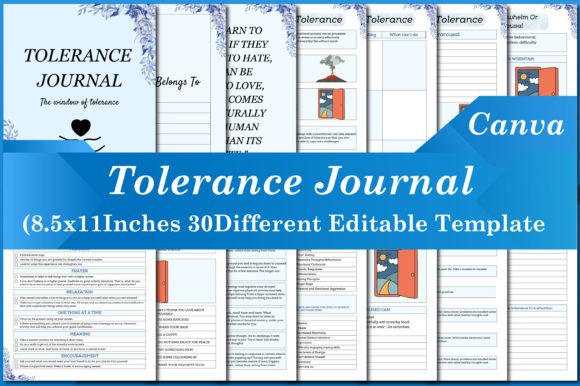
Tolerance Journal Canva Templates serve as a pre-designed framework for individuals seeking to track their emotional regulation and mental wellness. These templates are specifically structured around the psychological concept of the "Window of Tolerance," a state in which a person can effectively manage their emotions and daily stressors. By utilizing these digital assets, users aim to create a cohesive journaling experience that combines spiritual self-care with practical distress tolerance skills.
The product typically includes a collection of 30 pages designed in standard 8.5x11-inch dimensions. These pages are not just blank sheets; they are functional worksheets containing prompts and checklists. Common inclusions are "Signs of Overwhelm," "Radical Acceptance" exercises, and "Forgiveness Worksheets." The objective is to provide a structured outlet for processing complex emotions, making it a tool for both personal reflection and therapeutic support.
Evaluating the Features and Deliverables
When considering Tolerance Journal Canva Templates, it is essential to evaluate the specific deliverables offered. The primary value lies in the dual-format delivery. Users receive a print-ready PDF file, which is optimized for immediate printing or uploading to platforms like Amazon KDP (Kindle Direct Publishing). This file is generally set to CMYK color mode with 300 DPI resolution, ensuring that the printed text and graphics are sharp and professional.
Simultaneously, the package includes an editable Canva link. This feature is crucial for those who wish to personalize the content. Canva is a widely accessible graphic design tool, and the ability to edit the templates allows users to modify prompts, change color schemes, or add personal branding. However, the ease of use depends on the user's familiarity with Canva’s interface. While the templates are pre-designed, the editing process requires a basic understanding of layers and text editing within the platform.
Who Benefits from These Templates?
These templates are particularly well-suited for specific groups. Therapists, counselors, and life coaches often look for resources to provide their clients. A printable worksheet on "Distress Tolerance Skills" can be a tangible homework assignment that reinforces concepts discussed during a session. For these professionals, the ability to edit the templates is a significant advantage, allowing them to tailor the content to specific client needs or therapeutic modalities.
Additionally, individuals engaged in self-directed mental health work may find these templates beneficial. Those who are exploring concepts like "Radical Forgiveness" or managing hyperarousal often benefit from the structure a journal provides. The templates offer a roadmap, guiding the user through specific exercises rather than leaving them to face a blank page. This structured approach can make the process of emotional regulation feel more manageable and less overwhelming.
Tradeoffs and Practical Considerations
While the templates offer convenience, there are tradeoffs to consider. One significant consideration is the distinction between "no bleed" and "with bleed" printing specifications. The product description mentions "Size 8.5×11 With Bleed" but also notes "No Bleed" in the files included. This discrepancy is a critical detail for anyone planning to upload the journal to Amazon KDP or print it professionally. Users must verify which version they have to ensure the final product does not have awkward white edges or cut-off text.
Another consideration is the level of customization. While the Canva link allows for editing, the extent of this customization depends on the template's construction. If the design relies heavily on complex vector graphics or locked elements, making significant structural changes might be time-consuming. Users looking for a completely bespoke design might find the templates limiting, whereas those looking for a quick, professional-looking starting point will find them efficient.
Decision-Making Insights
To determine if these templates align with your goals, consider the intended use case. If the goal is to create a physical journal for sale or distribution, the pre-formatted KDP-ready files offer a substantial time savings. The inclusion of CMYK color settings and 300 DPI resolution addresses the technical requirements of professional printing, which can be a hurdle for those unfamiliar with print production.
If the goal is personal use or therapeutic application, the focus should be on the content quality. Reviewing the specific worksheets included—such as the "Window of Tolerance Worksheet" or the "Checklist – Spiritual Self Care Activities"—is vital. Do the prompts resonate with your approach to mental wellness? Do they address the specific challenges you or your clients face? The effectiveness of the journal hinges on the relevance of these prompts to the user's journey.
Situations Where Alternatives Might Be Better
There are scenarios where these specific templates may not be the best fit. For instance, if a user requires a digital journaling experience for tablets or e-readers, a PDF optimized for print might not be ideal. While the PDF can be used digitally, it may lack the interactive features (like fillable fields) that a dedicated digital planner would offer.
Furthermore, if a user is looking for a deeply integrated digital ecosystem—where journal entries sync with calendars or mood tracking apps—a static PDF or Canva template will fall short. In such cases, dedicated journaling apps or software might better serve the need for data integration and analysis. The Tolerance Journal Canva Templates are fundamentally designed for the creation of a static, printable product.
Conclusion
Tolerance Journal Canva Templates offer a structured, accessible way to engage with mental wellness concepts like distress tolerance and radical acceptance. They bridge the gap between digital convenience and the tactile experience of paper journaling. The inclusion of editable Canva links and print-ready PDFs provides flexibility for both personal use and professional distribution.
Ultimately, the decision to use these templates should be based on a clear understanding of your printing needs, your comfort level with Canva, and the relevance of the specific psychological content included. By weighing these factors, you can determine if this resource is a practical tool for your mental health toolkit or publishing goals. The value lies not just in the templates themselves, but in how effectively they are utilized to support a journey toward emotional regulation and self-awareness.