Unleashing Creative Potential: A Deep Dive into Bear Illustration Templates for Modern Projects
In the expansive world of digital design and creative manufacturing, the demand for high-quality, versatile graphics has never been higher. Whether you are a small business owner looking to brand your merchandise, an educator creating engaging classroom materials, or a hobbyist designing personalized gifts, the foundation of your project often lies in the assets you choose. Among the most enduring and popular motifs in Western design is the bear, specifically the grizzly bear, symbolizing strength, nature, and wilderness. This article explores the utility and significance of utilizing hand-drawn solid color grizzly bear illustrations on different product templates, and how professional-grade vector files can streamline your creative workflow.
The Power of the Bear Motif in Design
Before diving into the technical specifications of digital clip art, it is essential to understand why the bear remains a staple in design. The grizzly bear is an iconic symbol of the wild, often associated with ruggedness, resilience, and a connection to the natural world. In modern branding and merchandise, bear logos are versatile; they can be adapted for vintage outdoor brands, children’s education, sports teams, or eco-friendly product lines.
However, not all bear illustrations are created equal. A rough, pixelated image can ruin the aesthetic of a premium product. This is where the value of a hand-drawn style comes into play. Unlike sterile, computer-generated geometric shapes, hand-drawn illustrations offer warmth, personality, and a tactile quality that resonates with consumers. When this artistic style is combined with the technical precision of vector graphics, the result is a powerful design tool.
Understanding the Product: Digital Clip Art and Vector Templates
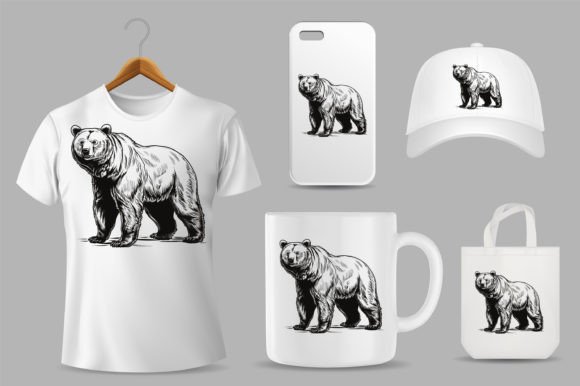
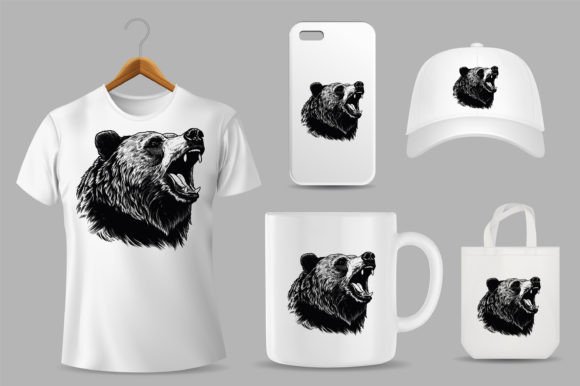
The core subject here is a specific type of digital asset: a grizzly bear illustration designed to be used across various product templates. This is not merely a picture; it is a toolset. The product is described as "Bear on Different Product Templates 2," which implies a pre-visualized system where the artwork is already mock-upped on items like t-shirts, canvas bags, and stickers.
What are Vector Graphics?
To appreciate the value of these files, one must understand the difference between raster and vector images. A raster image (like a JPEG or PNG) is made of pixels. If you enlarge a raster image too much, it becomes blurry or "pixelated." A vector image, typically saved as an EPS file format, uses mathematical equations to draw lines and curves. This means a vector bear illustration can be scaled from the size of a postage stamp to the side of a billboard without losing a single ounce of clarity. This scalability is crucial for professional printing and engraving.
Key Features and Technical Specifications
When sourcing digital art for professional use, technical specifications are paramount. The provided asset boasts several features that make it an industry-standard solution for designers.
- EPS File Format: Encapsulated PostScript (EPS) is the gold standard for vector exchange. It ensures compatibility across different design software, though it is natively optimized for Adobe Illustrator.
- Adobe Illustrator CC Version: This indicates the file is modern and utilizes the latest features of the industry-leading vector software.
- 300 DPI (Print Ready): While vectors can be any resolution, having a 300 DPI (Dots Per Inch) rating ensures that any rasterized effects or embedded images within the file are crisp and professional for high-quality printing.
- 100% Vector Shapes: Every line and curve is editable. There are no "dead" pixels; the entire image is constructed of movable points and paths.
- 100% Color Changeable: This is a critical feature for branding. If your brand colors are navy blue and gold, but the bear is black, you can easily change the colors to match your palette.
Practical Applications: Where Art Meets Industry
The true value of a versatile bear illustration lies in its application. Because the file is editable and scalable, it fits seamlessly into a wide array of industries and hobbies.
1. Apparel and Fashion
The most common use for such graphics is clothes printing. T-shirt designers often look for unique, hand-drawn aesthetics to stand out in a crowded market. A grizzly bear vector can be used for Direct-to-Garment (DTG) printing, screen printing, or heat transfer vinyl (HTV). Because the colors are changeable, a designer can create a "vintage wash" look by muting the colors or a bold, high-contrast look for streetwear.
2. Signage and Engraving
For businesses involved in engraving, vector files are non-negotiable. Laser engravers and CNC machines rely on vector paths to trace the image onto wood, leather, metal, or glass. A solid color, hand-drawn bear illustration provides clean lines that translate beautifully into etched wood plaques, leather patches for hats, or custom cutting boards.
3. Stickers and Decals
The sticker market has exploded in recent years. Using this template, creators can produce die-cut stickers. The vector nature allows the cutting machine to read the outline precisely, ensuring the sticker backing is cut perfectly around the bear's silhouette.
4. Scrapbooking and Printable Decorations
For the hobbyist, these files are a treasure trove. Scrapbooking requires high-resolution images that won't look grainy when printed at home. Furthermore, the ability to resize the bear allows crafters to use it as a small accent on a page or as the central focal point of a poster.
5. Canvas and Wall Art
Interior design often utilizes nature themes. By placing the bear illustration on a "product template" (a mockup of a canvas frame), designers can visualize and sell wall art without holding physical inventory. This is a cornerstone of the Print-on-Demand (POD) business model.
The Significance of "Different Product Templates"
The mention of "Different Product Templates" in the product title highlights a workflow optimization. For a designer, creating a mockup—showing how a logo looks on a shirt or a mug—takes time. By providing the bear illustration already placed on various templates, the asset serves a dual purpose:
- It provides the raw artwork (the EPS file) for production.
- It provides marketing materials (the templates) to show clients or customers what the final product will look like.
This bridges the gap between the creation phase and the sales phase, making it an invaluable resource for entrepreneurs.
Addressing Common Misconceptions
There is a common misunderstanding regarding "editable" files. Some users assume that buying a graphic means they can only use it as-is. However, with a 100% vector, editable file, the user is buying the source code of the design.
Clarification on Usage: While the file is "Easy to edit," this does require basic knowledge of software like Adobe Illustrator. However, because it is a "solid color" design, it is often simpler to modify than complex photorealistic illustrations. Beginners can often manage color changes with minimal training.
Another assumption is that "Clip Art" implies low quality, generic imagery from the 1990s. Modern digital clip art, especially hand-drawn vectors, is sophisticated, detailed, and designed for high-end commercial production.
Conclusion
The availability of high-quality digital assets like the Hand Drawn Solid Color Grizzly Bear Illustration democratizes design. It allows a solo entrepreneur to compete with large corporations by providing access to professional-grade, print-ready, and infinitely customizable artwork. Whether used for engraving a personalized gift, printing a line of eco-friendly t-shirts, or designing a classroom bulletin board, these vector templates offer the flexibility and quality required in the modern creative landscape. By understanding the technical features—such as the EPS format and vector scalability—users can unlock the full potential of these digital tools.